
No fewer than 14 million children are currently living in motherless baby homes and orphanages across Nigeria.
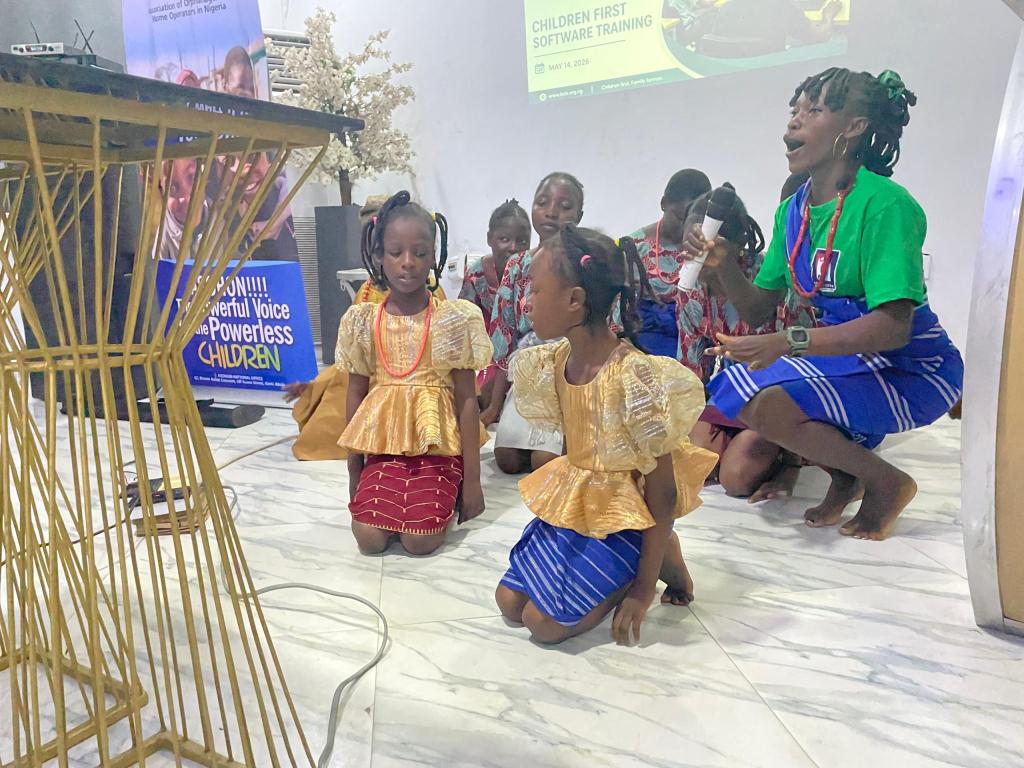
The National President of the Association of Orphanages and Home Operators (ASOHON), DR. Gabriel Oyediji disclosed this on Thursday May 14 in Ilorin, Kwara State, during the launch of the ASOHON Kwara State chapter and a two-day training seminar on the newly introduced Children First Software (CFS), a digital platform designed to improve record keeping and welfare tracking for vulnerable children.
He said about 95 per cent of children in care homes across the country are housed in private facilities rather than government-owned institutions, warning that most operators are struggling to cope with rising costs without adequate state support.
According to him, some operators are already facing regulatory challenges, disclosing that five home operators are currently in police custody in Minna, Niger State, over issues related to documentation and compliance.
He also lamented declining donor confidence in orphanage homes, saying negative narratives have overshadowed the humanitarian work being done in the sector.
Despite the challenges, Oyediji described the Children First Software as a major breakthrough that will transform child protection services in Nigeria.
He noted that the platform would help preserve vital records, improve accountability, and prevent loss of data during disasters such as fire outbreaks or flooding.
Oyediji, however, acknowledged that poor electricity supply, low digital literacy, lack of computers and shortage of trained personnel could slow down implementation, but insisted that ASOHON had begun sensitisation and capacity-building programmes nationwide.
He further advocated a shift from institutional care to family-based alternatives such as adoption and foster care, saying children develop better in family environments.
In her remarks, the Kwara State Coordinator of ASOHON, Dr. Mrs. Omolehin Christie, called for urgent intervention to sustain orphanage homes, citing rising economic hardship, funding shortages, declining donations, poor electricity supply, high operational costs, and other irregularities.
Christie stressed that stronger family support systems and increased public donations were critical to reducing the number of abandoned children entering institutions.
Also speaking, the Kwara State Commissioner for Social Development, Hajiya Mariam Nnafatima Imam, emphasised the need for continuous training and improved funding for caregivers. She noted that proper child care requires not only compassion but also professional capacity and government backing.
With the introduction of the Children First Software initiative, it is hoped that millions of orphaned and vulnerable children will be better identified, protected and ultimately supported across the country.

Leave a comment