
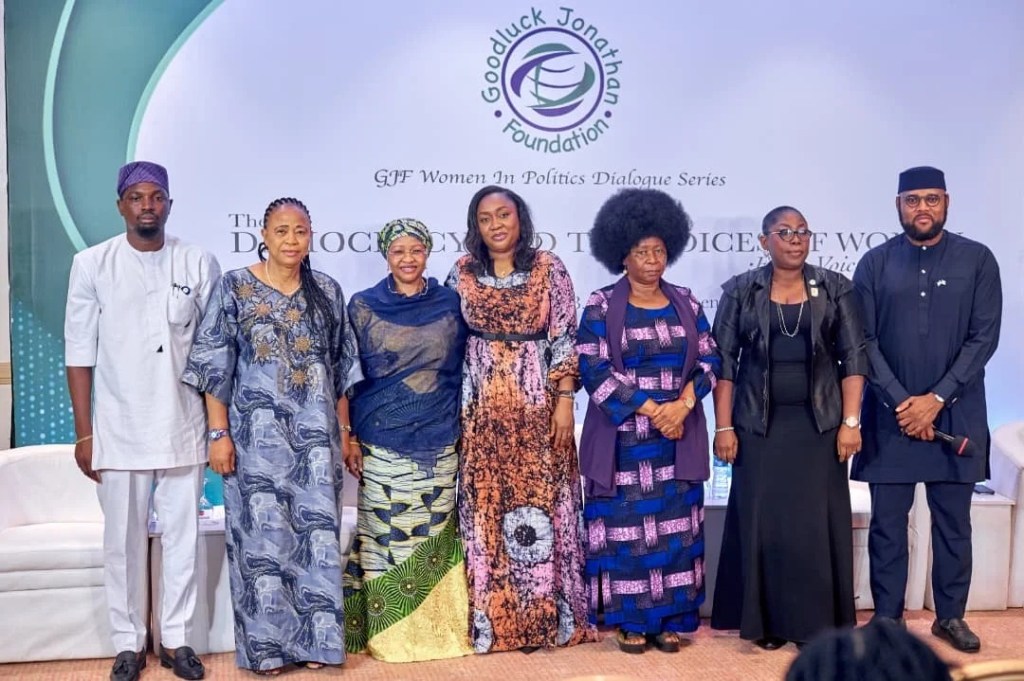
The Goodluck Jonathan Foundation urges moving beyond talk to tangible reforms that give women a stronger voice and seat at the decision-making table.
The Goodluck Jonathan Foundation (GJF) has called for concrete steps to strengthen women’s participation in politics, leadership, and governance. The appeal came during a high-level policy dialogue in Abuja marking International Women’s Day 2026, themed “Democracy and the Voices of Women: From Voice to Power.”
GJF Executive Director Ann Iyonu said that despite years of discussion, practical reforms remain limited. She stressed that structural and systemic barriers must be dismantled to allow women meaningful participation in Nigeria’s democratic system.
The dialogue brought together civil society leaders, lawmakers, and political figures to deliberate on reforms to bridge the gender gap. Iyonu emphasised the importance of translating discussions into policy influence, leadership opportunities, and decision-making roles for women.
Speaking at the event, Swedish Ambassador to Nigeria Anna Westerholm, represented by Seyifunmi Adebote, highlighted gender equality as a cornerstone of democracy. She cited Sweden’s six-month paternity leave and the Girl Child Ambassador initiative as examples of policies that challenge gender norms and empower women.
Former ActionAid Nigeria Country Director, Ene Obi, noted the stark underrepresentation of women: despite making up 49.3% of Nigeria’s population, women hold only 4–4.5% of seats in the 10th National Assembly, ranking Nigeria among the lowest in Africa. Obi called for the passage of the Special Seats Bill to increase female representation and addressed barriers like political violence, high campaign costs, and patriarchal party structures.
Labour Party National Chairman Sen. Nenadi Usman urged women to contest elections actively. “You cannot be talking from outside; you must speak from inside. If there are only four women in the Senate, what has been done to address that?” she asked.
Moderator Matthew Ayebakuro of the FCDO reminded participants that women have historically voiced their concerns, citing 1929 protests and Funmilayo Ransome-Kuti’s activism, but the challenge remains turning voices into real power and leadership.

Leave a comment