
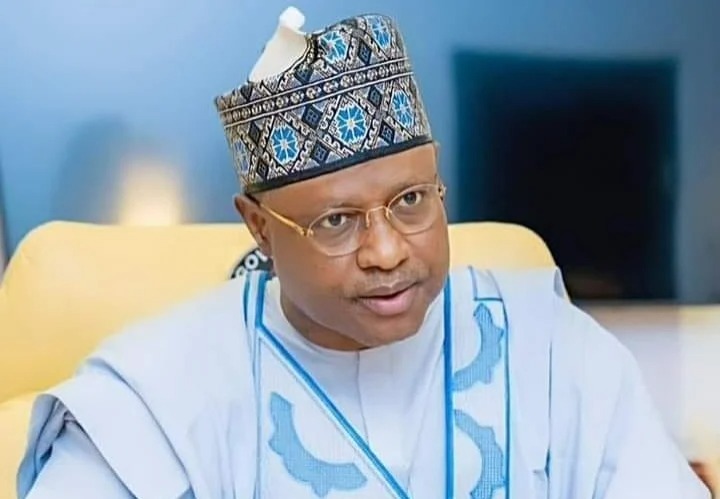
Kaduna governor says Nigeria’s democracy is losing out by sidelining women
Kaduna State Governor Uba Sani has thrown his weight behind a proposed constitutional amendment that would reserve legislative seats for women, arguing that Nigeria’s politics does not reflect women’s population strength or voting power.
Speaking at the North-West zonal launch of the Reserved Seats for Women Bill, Sani said women make up nearly half of Nigeria’s population and an even larger share of active voters, yet hold less than five per cent of seats in the National Assembly.
“This gap is not about competence or capacity,” the governor said. “It is the result of long-standing structural, cultural, economic and institutional barriers that have kept women out of power for decades.”
Sani noted that the North-West has historically recorded low female participation in elective politics, shaped by deep-rooted social norms and limited access to political networks. But he insisted that change is possible with intentional leadership and supportive institutions.
Pointing to Kaduna State as proof, the governor highlighted that the state has a female deputy governor, a female majority leader of the House of Assembly, a female Head of Service, a female local government chairman, and women heading key ministries such as Health, Youth Development, Business Innovation and Women Affairs.
“These milestones didn’t happen by accident,” Sani said. “They are the result of deliberate choices and the courage of women who stepped forward to lead.”
Explaining the bill, the governor said it proposes 182 additional seats reserved exclusively for women across federal and state legislatures – without scrapping existing seats. The plan includes one extra Senate seat per state and the FCT, one additional House of Representatives seat per state and the FCT, and three extra seats per state in State Houses of Assembly, one per senatorial district.
He stressed that the bill is designed as a temporary measure, lasting four election cycles (16 years), after which it would be reviewed. According to him, similar models have delivered results in countries like Rwanda, Uganda, Kenya, Tanzania, Bangladesh and Zimbabwe.
Also speaking, APC National Women Leader, Dr Mary Idele, described the decline in women’s representation as alarming, noting that female lawmakers dropped from about 7 per cent in 2003 to under 5 per cent in 2019 and 2023.
“A democracy where half of the population controls less than five per cent of political power is operating below its full capacity,” Idele said, adding that the bill would guarantee protected political space for women, enrich policymaking and inspire young girls nationwide.
She commended President Bola Ahmed Tinubu’s Renewed Hope Agenda, saying the reserved seats proposal “is not a favour to women, but an investment in Nigeria’s democratic future.”

Leave a comment