
The UN is staying supportive—but Nigeria is now firmly in the driver’s seat of its humanitarian future.
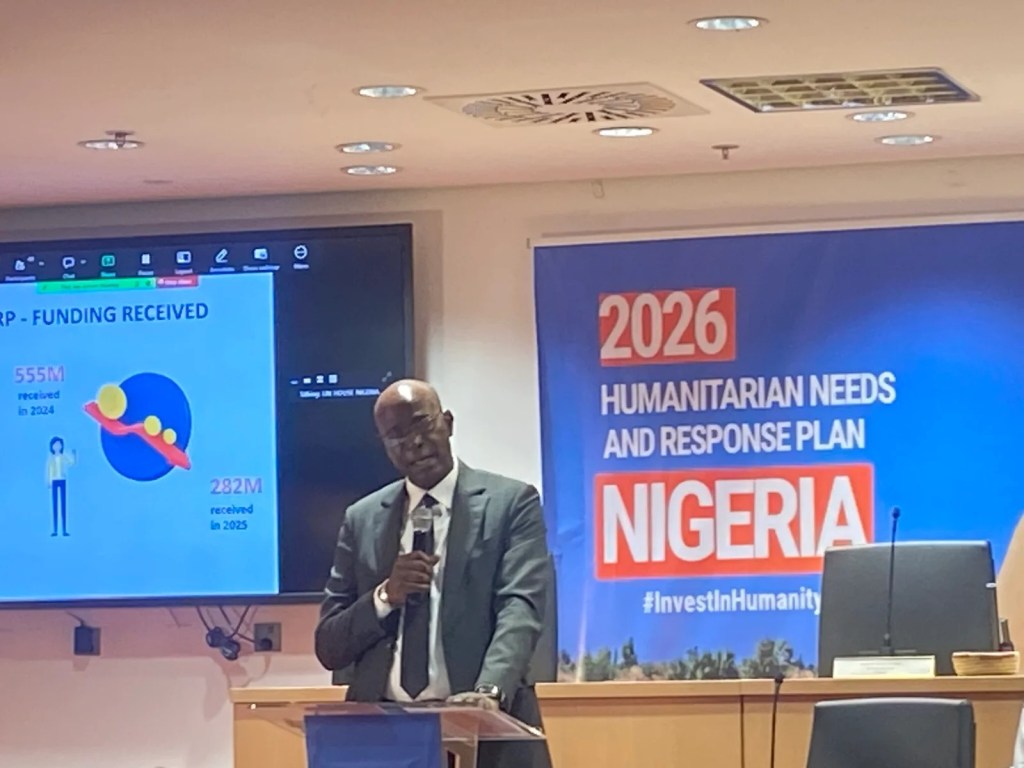
At the launch of Nigeria’s 2026 Humanitarian Needs and Response Plan (HNRP) for Borno, Adamawa and Yobe, UN Resident and Humanitarian Coordinator Mohamed Fall made it clear: the era of internationally led humanitarian aid in Nigeria is winding down.
“This phase belongs to Nigeria,” Fall said, stressing that leadership must now come from national and state institutions, civil society, communities and women-led organisations. The UN, he added, will continue backing life-saving actions, protection efforts and funding mobilisation—side by side with government at all levels.
Fall praised the Ministry of Humanitarian Affairs for strengthening partnerships and mobilising domestic resources, noting that Nigeria has both the capacity and the people to lead its own response.
Representing the minister, Dr Yusuf Tanko said the 2026 HNRP marks a major shift—from endless emergency aid to resilience, recovery and long-term solutions under President Tinubu’s New Hope Agenda. Humanitarian action, he said, must now help families rebuild dignity and permanently escape poverty.
Governors from Borno, Adamawa and Yobe, along with civil society and INGO leaders, echoed the call for coordinated, Nigeria-led solutions—especially as food insecurity and malnutrition remain critical challenges in the North-East.
The UN is still in support mode, but Nigeria is taking full ownership of its humanitarian response in 2026.

Leave a comment