
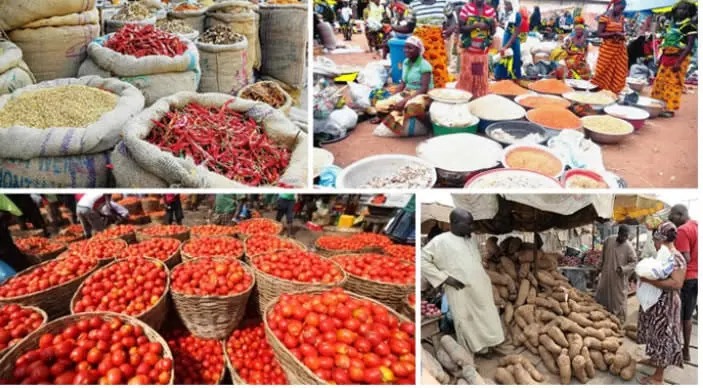
Recent reports and market surveys across Nigeria indicate that food prices are beginning to decline in certain regions, providing some relief to households amidst ongoing inflation challenges. This trend is driven by increased supply from recent harvests and government measures aimed at stabilizing prices.
In Kaduna, traders and consumers observed a slight drop in the prices of staples like tomatoes, peppers, rice, and beans, though experts caution that such relief may be temporary if transportation and fuel costs rise again. Markets in Kano, including local rice, maize, millet, and beans, also recorded significant price reductions, with local rice dropping from N70,000 to N62,000-N63,000 per bag, and maize from N58,000 to N50,000.
Transport improvements and increased market supply contributed to these decreases, but analysts warn that sustained government policy, better storage infrastructure, and market regulation are necessary to maintain the trend. Economists emphasize that seasonal factors largely influence the current prices and call for targeted policies like subsidized inputs, enhanced rural infrastructure, and stricter monitoring of middlemen and hoarders.
In the southern states like Nigeria’s national capital, food inflation dropped to 20.12% in August 2025, the lowest in months, according to the National Bureau of Statistics (NBS). Food inflation eased from 21.87% in August, mainly due to falling prices of staples like rice, maize, and vegetables, amid relative exchange rate stability.
However, imported food prices remain high due to forex volatility, with inflation rates for imported goods still rising. Many experts stress the importance of maintaining supportive policies, improving storage, boosting local production, and lowering logistics costs to sustain the downward trend.

Leave a comment