
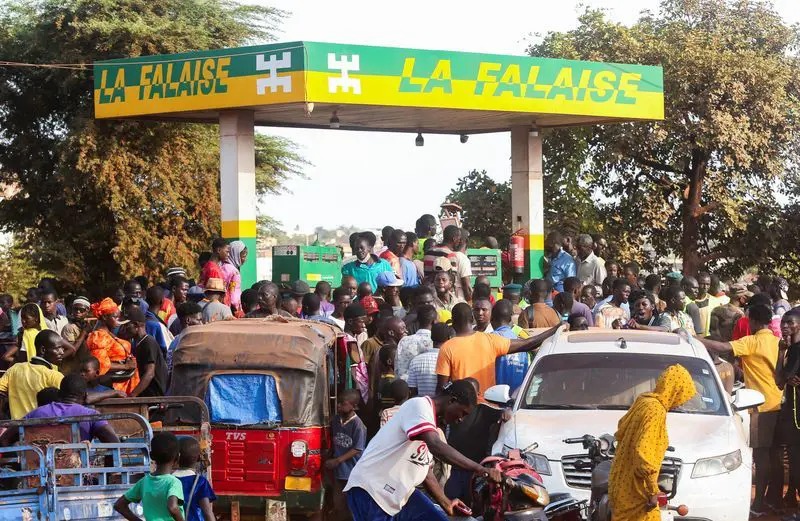
A two-month-long fuel blockade imposed by al Qaeda-linked militants from Jama’at Nusrat al-Islam wal-Muslimin (JNIM) has nearly crippled Mali’s capital, Bamako, raising alarm over the stability of the military government. Operating within 50 km of the city, JNIM’s blockade has forced school closures and cut diesel electricity supply, severely disrupting economic and social life.
Security analysts warn the move is the gravest challenge yet to the military rulers who took power in 2021 and could trigger Mali’s third coup since 2020, further destabilizing the country and emboldening jihadist ambitions for political recognition.
The blockade has caused a massive fuel price surge—from $25 to $130 per liter—leading to widespread public frustration while sparking fears of institutional collapse in Mali and ripple effects across neighboring Sahel states Burkina Faso and Niger.
JNIM’s long-term goal appears to be negotiations for political legitimacy, either with the current government or a post-coup administration. Meanwhile, increasing attacks on military targets and territorial expansions intensify the crisis.
The worsening fuel scarcity has led to school closures until November 9 and prompted foreign embassies, such as the U.S., Britain, and Italy, to urge their citizens to evacuate. Although no mass exodus has yet occurred, the situation remains precarious, with no scenario ruled out.

Leave a comment