
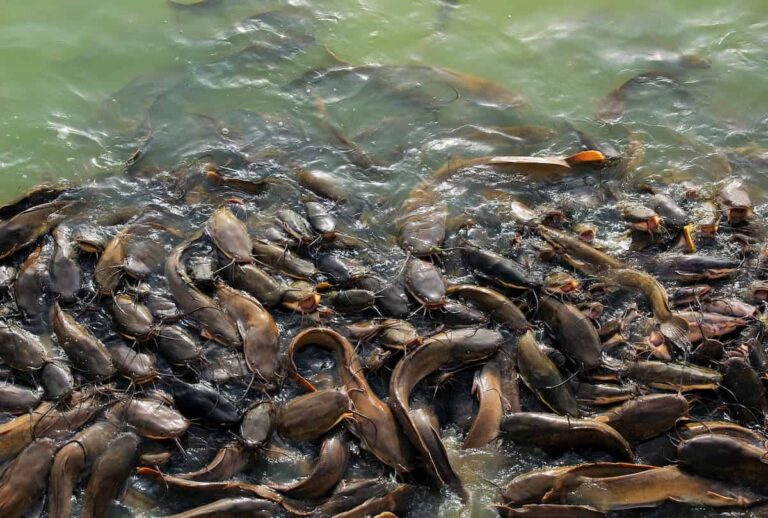
Nigeria’s aquaculture sector is producing about 500,000 metric tonnes of fish every year, making the country the biggest aquaculture producer in sub-Saharan Africa, says Dr. Charles Iyangbe, WorldFish Nigeria’s Country Representative. Speaking at Fisheries Society of Nigeria’s 40th anniversary in Nasarawa, he revealed fisheries jobs provide livelihoods for over 10 million Nigerians.
But here’s the catch: Nigeria’s total annual fish demand is 3.6 to 3.9 million tonnes, while local production only hits around 1.2 million tonnes. This means an enormous supply gap of 2.4 million tonnes, filled by imports costing Nigeria more than $1.2 billion a year.
The average Nigerian consumes just 11.3 kg of fish annually, far below the global average of 21 kg, highlighting an urgent need to boost local production. Challenges like expensive fish feed, limited fingerlings, overreliance on catfish, and post-harvest losses hold back growth, alongside strains on wild fish stocks from overfishing and pollution.
Despite hurdles, Nigeria’s vast aquatic ecosystems offer huge potential. Cutting-edge solutions like Integrated Multi-Trophic Aquaculture (IMTA), offshore cage culture, and advanced breeding technologies could help Nigeria not only close its supply gap but become a fish exporter. WorldFish, part of the CGIAR global research partnership, supports these efforts and has already positively impacted millions.
With the right mix of innovation, policy, and partnerships, Nigeria’s blue economy could soar, boosting food security, creating jobs, and restoring ecosystems.

Leave a comment